Every case with a deadline and an owner, every hour inside the case.
A law firm lives on cases and hours. The client who came by referral, the proposal sent, the agreed deadline and the signed contract stay in the system, not in the memory of whoever was in the conversation.
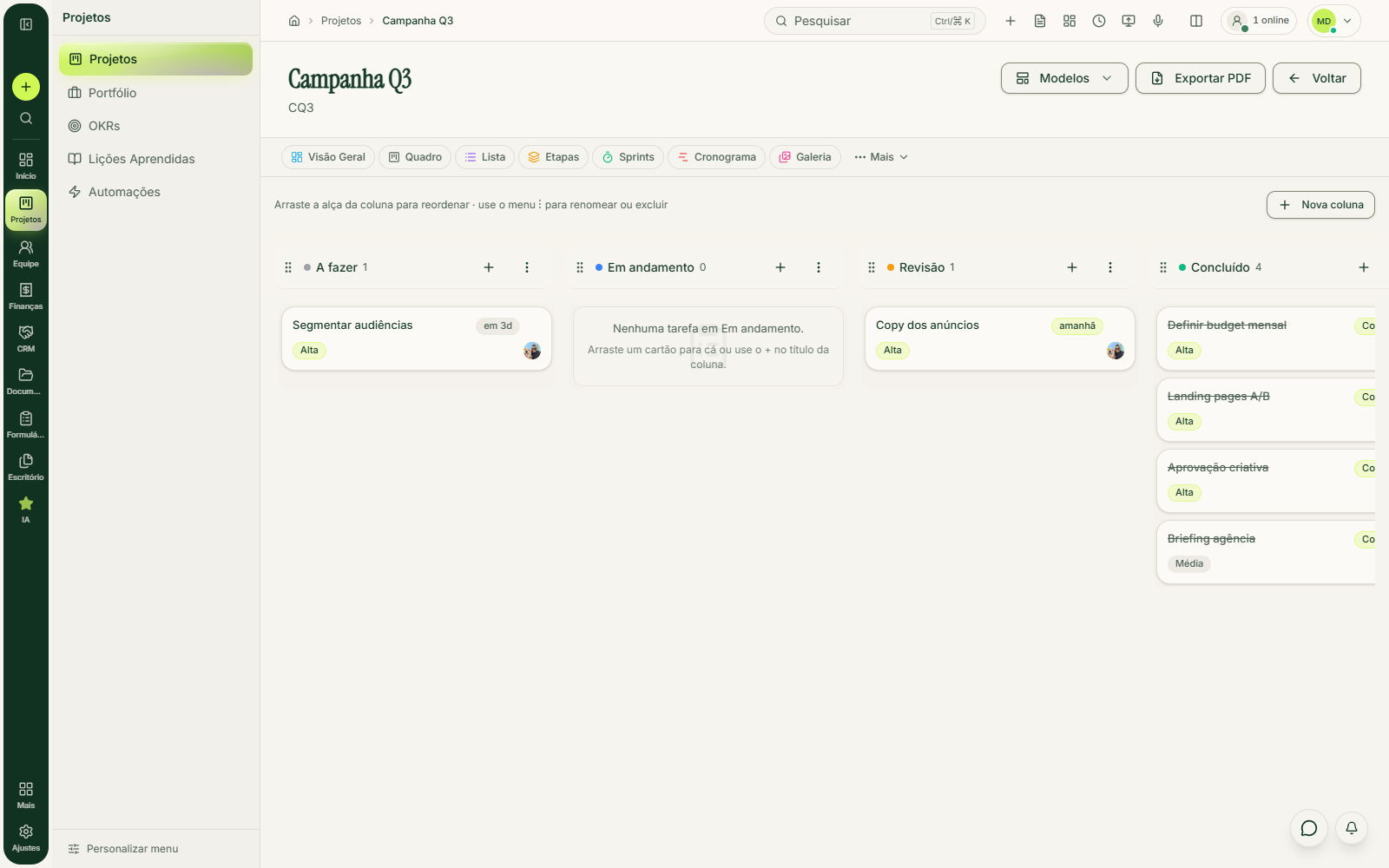
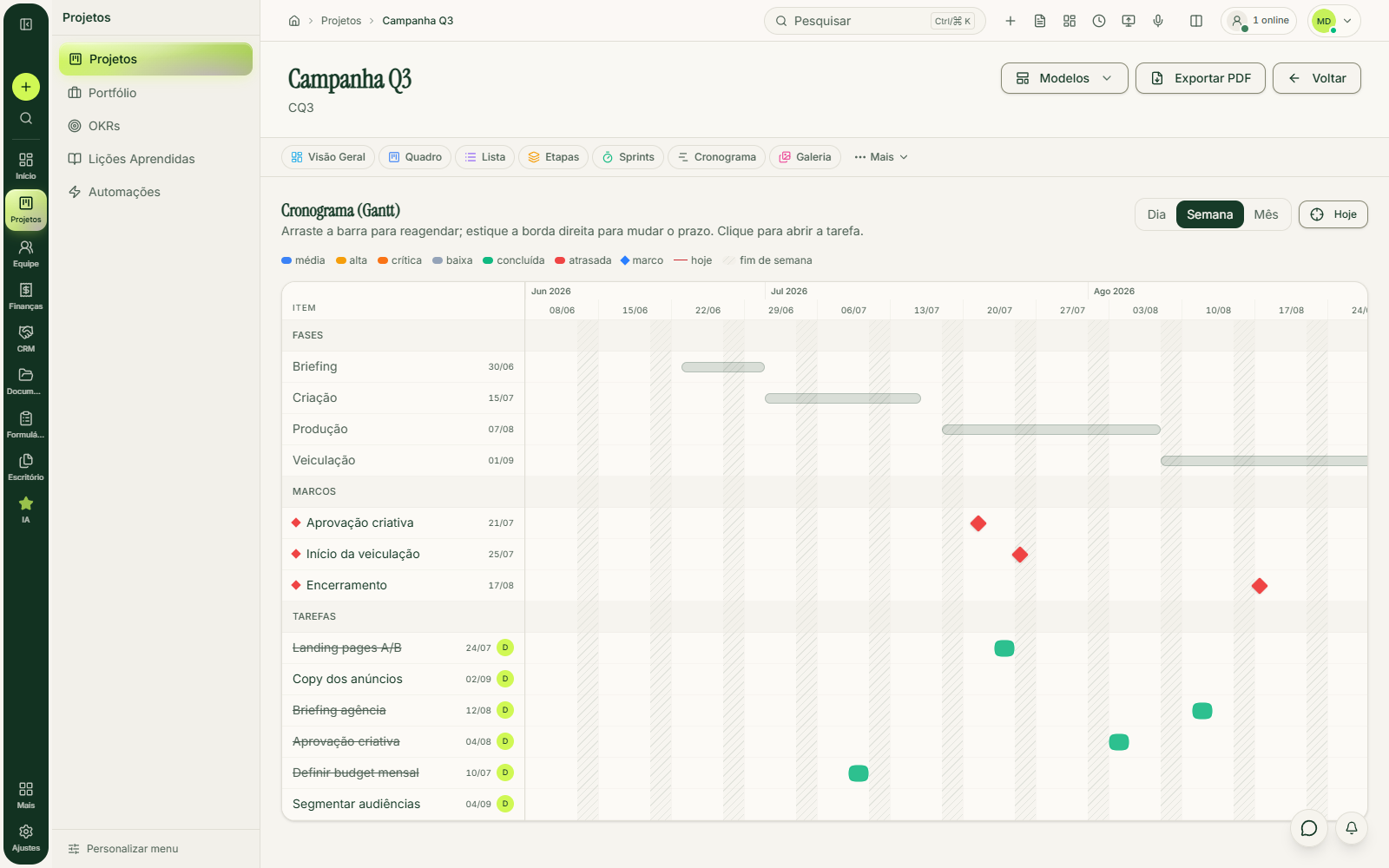
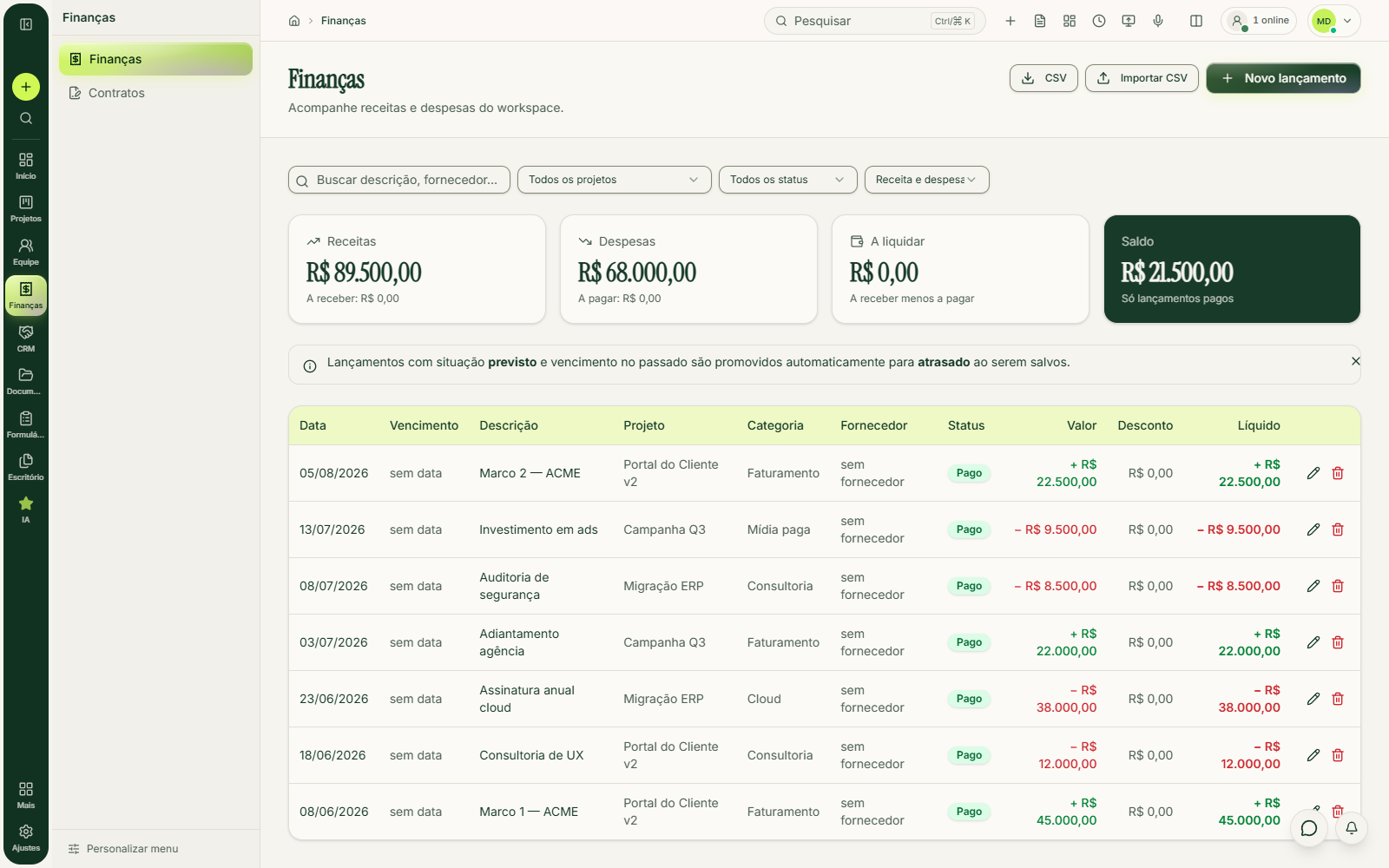
How it is today, how it looks with FAYOL
The firm runs on memory
- The referral gets lost in a chat. The name arrives in a partner's messaging app and never becomes a firm record.
- The proposal goes unanswered. Nobody knows for how many days, or whose turn it was to make the next call.
- The deadline lives in one person's calendar. When they leave, the firm learns the date from the client.
The firm runs on records
- The referral comes in as a deal. With an owner and the next activity already scheduled on the card.
- A stalled proposal shows up red. The card follows the next activity: green when scheduled, red when overdue, amber when there's none.
- The deadline is a task with an owner. It stays in the case, with a date and a person in charge, and shows up on the firm's timeline.
What your firm gains with FAYOL
A stalled deal starts rotting as its days in the stage add up, and the daily sweep flags it in the notification bell. The public intake form takes the contact from the firm's website straight into the pipeline.
See the CRMThe dates are the ones the firm enters. FAYOL follows up with the owner, but it doesn't file petitions, check court records or calculate procedural deadlines on its own.
See projects and schedulesWhoever handles finance approves the hours before they become an invoice, and winning the deal posts the expected revenue, in monthly installments when the fee is recurring.
See financeWith the AI Module (R$ 249.90/month), the minutes come out for you to review and what was agreed becomes a list with owners and deadlines.
See meetings and minutes
From first contact to signed contract
The name that came by referral comes in as a lead. Once qualified, it becomes a deal in the pipeline. The intake form on the firm's website lands right there.
The deal moves through the stages. Each stage has a probability, its own color and required fields: until they're filled in, the card can't move to the next one.
The won and lost zones appear while you drag. Losing requires picking a reason from a list, and the report adds up those reasons later.
The fee agreement is signed electronically inside the system and stored with the case.
Winning the deal can create the case project and post the expected revenue in finance, in monthly installments when the fee is recurring.
Confidentiality is permission, not a promise
Isolated workspace
The firm can keep one workspace per partner or per client. What's in one doesn't show up in the other.
Everyone sees what's theirs
Without permission to see everything, a person sees only their own records. The rule applies in the database, not just on screen.
Documents stay in the case
Contracts, receipts and client files stay inside the case, and who can open them depends on each person's role.
Pro (R$ 299/month)
The CRM comes with every plan, and whoever manages the pipeline needs the CRM permission. Pro adds hours, finance, reports and meetings, with 4 workspaces and 15 users. Starter (R$ 149/month) covers cases and documents, without hours or finance; Scale (R$ 599/month) gives a separate workspace per partner or per client.
The AI-written minutes come from the AI Module, R$ 249.90/month for the whole team: the same add-on as the AI agents, which propose and wait for approval on their own screen. FAYOL doesn't file petitions, check court records, calculate procedural deadlines or integrate with PJe: the dates are the ones the firm enters. The CRM also doesn't send messages through messaging apps or send mass email. Try it for 7 days with no card; after that it's billed in reais, by Pix or card.
From first contact to signed contract, without leaving the system.
7 days free, no card. Start with the case that's already on your desk.